
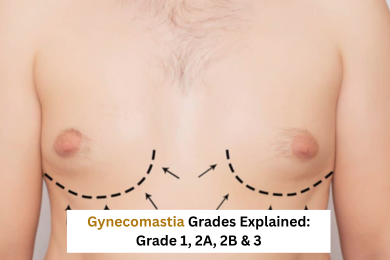
Gynecomastia is a common condition in which men develop enlarged breast tissue due to hormonal imbalance, excess glandular tissue, fat accumulation, or a combination of these factors. While the condition itself is not dangerous, it often causes significant physical discomfort and emotional distress.
One of the most important aspects of understanding gynecomastia is grading. Doctors classify gynecomastia into grades (Grade 1, 2A, 2B, and 3) based on breast size, tissue composition, and skin excess. These grades help determine severity, treatment options, and whether surgery is required.
This guide explains each gynecomastia grade in detail, helping you identify where you may fall and what treatment approach is typically recommended.
What Are Gynecomastia Grades?
Gynecomastia grades are a medical classification system used to describe the extent of male breast enlargement. The grading is primarily based on:
- Amount of glandular breast tissue
- Presence of excess fat
- Degree of skin looseness or sagging
- Position of the nipple-areola complex
Doctors use this classification to differentiate mild cases that may resolve naturally from more advanced cases that usually require surgical correction.
Gynecomastia Grade 1: Mild Enlargement
Grade 1 gynecomastia is the mildest form of the condition. It involves a small amount of glandular tissue located directly under the nipple.
Key characteristics:
- Slight puffiness around the nipple
- Minimal or no visible chest enlargement
- No excess skin
- Nipple position remains normal
In many cases, Grade 1 gynecomastia is barely noticeable, especially when wearing clothes. It often appears during puberty due to temporary hormonal fluctuations and may resolve on its own within months.
Treatment approach:
- Observation and reassurance
- Lifestyle changes such as weight management
- Hormonal evaluation if symptoms persist
Surgery is usually not required unless the condition becomes persistent or psychologically distressing.
Gynecomastia Grade 2A: Moderate Without Skin Excess
Grade 2A gynecomastia involves a moderate increase in breast tissue that extends beyond the areola but does not cause sagging.
Key characteristics:
- Noticeable breast enlargement
- Firm glandular tissue beneath the nipple
- No loose or hanging skin
- Chest appears fuller but still tight
This grade is more visible in fitted clothing and may cause embarrassment during activities like swimming or gym workouts.
Treatment approach:
- Medical evaluation to identify hormonal or drug-related causes
- Exercise alone is usually insufficient
- Surgical removal of glandular tissue is often recommended
Liposuction alone may not be effective if dense gland tissue is present.
Gynecomastia Grade 2B: Moderate With Skin Excess
Grade 2B gynecomastia is similar in size to Grade 2A but includes excess or loose skin, leading to mild sagging.
Key characteristics:
- Moderate breast enlargement
- Visible drooping of the chest
- Areola may appear stretched or enlarged
- Exercise does not correct the issue
This grade is often seen in men who have experienced significant weight loss or long-standing gynecomastia.
Treatment approach:
- Combination of gland excision and liposuction
- Skin-tightening techniques may be required
- Early intervention helps avoid more extensive surgery later
Correct diagnosis is important, as this grade is often confused with fat chest (pseudogynecomastia).
Gynecomastia Grade 3: Severe Enlargement
Grade 3 gynecomastia represents the most advanced and severe form of the condition.
Key characteristics:
- Large, pendulous breasts
- Significant skin excess and sagging
- Nipple positioned lower on the chest
- Feminine chest appearance
Men with Grade 3 gynecomastia often experience physical discomfort, posture issues, and profound psychological distress.
Treatment approach:
- Surgical correction is almost always required
- Gland removal, liposuction, and skin excision
- Nipple repositioning may be necessary
Nonsurgical methods are ineffective at this stage.
Gynecomastia Grades Comparison (Quick Overview)
| Grade | Enlargement | Skin Excess | Visibility | Common Treatment |
| Grade 1 | Mild | None | Minimal | Observation |
| Grade 2A | Moderate | None | Noticeable | Gland excision |
| Grade 2B | Moderate | Mild | Obvious | Surgery + skin tightening |
| Grade 3 | Severe | Significant | Very obvious | Full surgical correction |
How Doctors Determine Your Gynecomastia Grade?
Diagnosis begins with a physical examination of the chest. Doctors assess:
- Firmness of tissue (fat vs gland)
- Degree of enlargement
- Skin elasticity
- Nipple position
In some cases, ultrasound or blood tests may be recommended to rule out hormonal disorders or other underlying causes. Accurate grading ensures the right treatment plan and prevents unnecessary procedures.
Treatment Options Based on Gynecomastia Grade
Treatment depends entirely on the grade and cause of gynecomastia.
- Lifestyle changes: Useful only in early or fat-dominant cases
- Medication: Limited role and effective mainly in early stages
- Liposuction: Helps remove excess fat but not gland tissue
- Gland excision: Essential for true gynecomastia
- Skin removal: Required in advanced grades with sagging
Can Gynecomastia Grades Worsen Over Time?
Yes. Gynecomastia can progress if underlying factors are not addressed. Common reasons include:
- Ongoing hormonal imbalance
- Weight gain or obesity
- Use of anabolic steroids or certain medications
- Delayed treatment
Early diagnosis and intervention can prevent progression from mild to severe grades.
Gynecomastia vs Pseudogynecomastia (Fat Chest)
Gynecomastia involves glandular breast tissue, while pseudogynecomastia is caused purely by fat accumulation.
Key differences:
- Gynecomastia feels firm or rubbery
- Fat chest feels soft and diffuse
- Gynecomastia does not disappear with exercise alone
When to See a Doctor for Gynecomastia?
You should consult a doctor if:
- Chest enlargement persists beyond puberty
- You feel pain, tenderness, or rapid growth
- Gynecomastia affects confidence or mental health
- One side grows faster than the other
Final Thoughts
Understanding gynecomastia grades (Grade 1, 2A, 2B, and 3) helps men make informed decisions about their health and appearance. While mild cases may resolve naturally, moderate to severe grades usually require surgical intervention for lasting results.
The key to successful treatment lies in early diagnosis, accurate grading, and expert evaluation. If you suspect gynecomastia, consulting a qualified specialist is the first step toward restoring confidence and chest contour.
Orange Tree Health offers advanced gynecomastia treatment in Delhi with expert surgeons, personalized care, modern techniques, and discreet consultations. Thus helping men regain confidence through safe, effective, lasting results and natural aesthetics. Book your appointment now.